
120Hz vs 60Hz Smartphone Display: Real Difference & Worth It?
What Is Refresh Rate, Anyway?
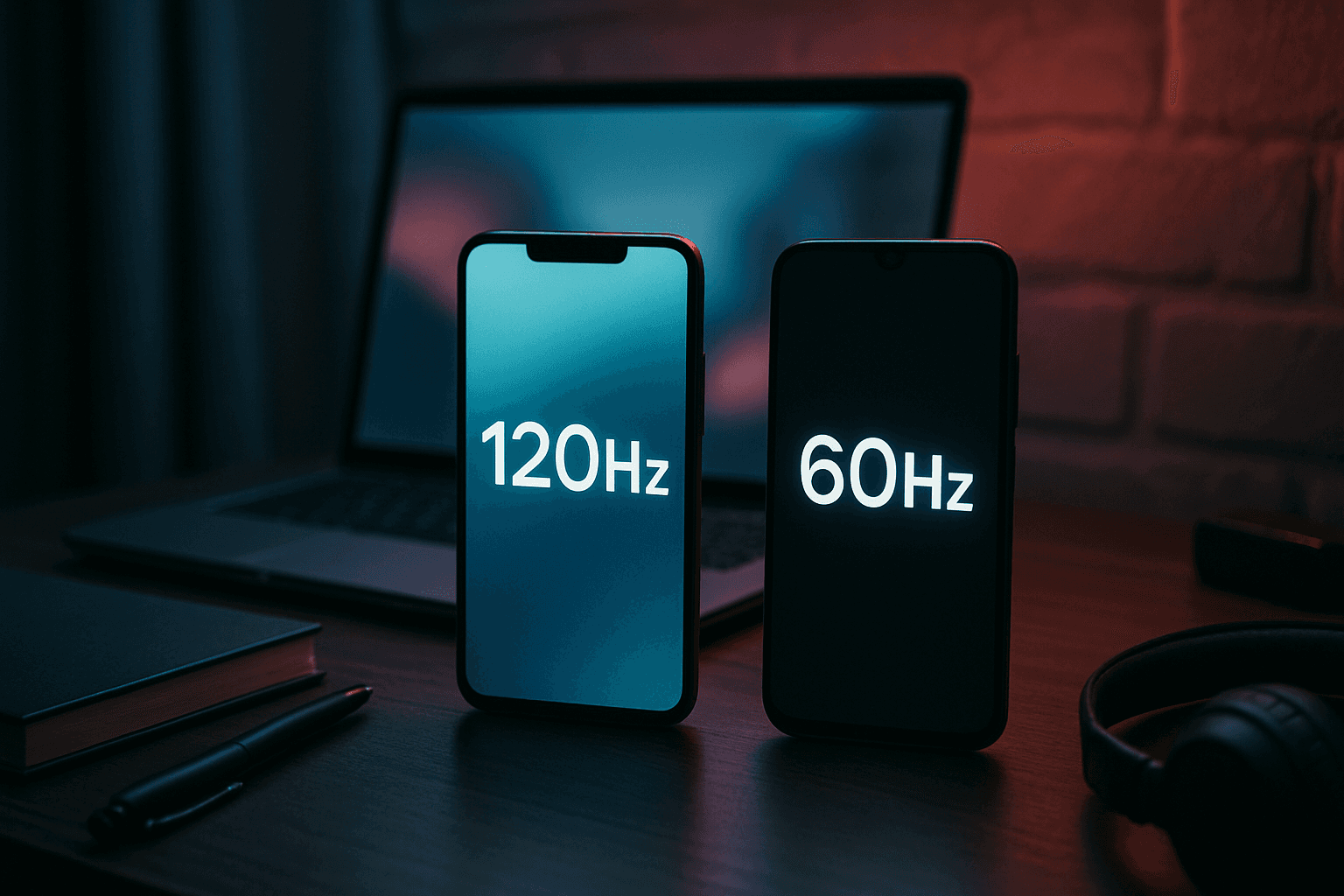
Your phone's refresh rate refers to the number of times its display updates in a second. A 60Hz display refreshes 60 times per second, while a 120Hz display accomplishes this at a faster pace—120 times per second.
Think of it like a flipbook. More pages flipped per second means smoother-looking motion. The image on a screen is never moving. Instead, they show a sequence of images at different points of motion, simulating smooth motion by tricking our brains to fill in the microscopic blanks between static images.
The crucial thing to understand is that refresh rate and frame rate aren't the same:
- Refresh Rate (Hz): How many times the screen updates per second
- Frame Rate (FPS): How many frames the phone is generating per second
If a game runs at 60fps, even a 144Hz screen won't magically make it smoother unless the game supports higher frame rates.
The Hierarchy: 60Hz vs 90Hz vs 120Hz vs 144Hz
60Hz: The Standard
60Hz has long been the standard for all types of screens. The rate is sufficient for most movie content and videos, and most entry-level smartphones still have 60Hz refresh rates.
60Hz works fine for everyday tasks. But once you've used higher refresh rates, 60Hz can feel sluggish—especially when scrolling long pages.
90Hz: The Middle Ground
90Hz is where the magic begins. The jump from 60Hz to 90Hz is immediately noticeable. It made scrolling and animations noticeably smoother without being too heavy on battery consumption. Ideal for mid-range phones, it strikes a nice balance between cost and performance.
90Hz is often the best value—noticeably smoother than 60Hz without always being premium-priced.
120Hz: The Sweet Spot
In practice, the jump from 60Hz to 120Hz is clearly noticeable. 120Hz is the refresh rate that changed the game and is now the standard for flagship devices like the Samsung Galaxy S series and iPhone Pro models. Scrolling becomes incredibly smooth, and games that support 120FPS feel completely different.
For most everyday users, the jump from 60Hz to 120Hz is similar to the difference between SD vs HD video: once you've experienced it, going back feels noticeably rough.
144Hz: Overkill for Most
144Hz is rare in smartphones and found primarily in dedicated gaming phones like the Asus ROG Phone series and some Nubia devices. The difference between 120Hz and 144Hz is far less noticeable than between 60Hz and 120Hz.
In reality, the difference is marginal for most users. One key reason is that the system interface itself is often capped at 120Hz. App optimization also plays a major role—most apps are not designed to take advantage of refresh rates beyond 120Hz.
Real-World Difference: Where You'll Actually Notice It
Scrolling and General Use
When you scroll through social media, open apps, switch between screens, or play supported games, a higher refresh rate makes the phone feel more fluid and responsive. While 120Hz screens offer smoother scrolling and more responsive touch interaction, the benefits aren't always obvious—especially if you're upgrading from a modern 60Hz device with good software optimization.
Gaming
Gaming is where higher refresh rates shine. Games that support high frame rates feel responsive and fluid. Touch input feels more immediate, especially in shooters and racing games.
However, not every game takes advantage of high refresh rates. Most mobile games run at 60fps or 90fps. Gaming is one area where higher refresh rates could matter, though even here, limitations remain.
Touch Responsiveness
High refresh rates enhance touch responsiveness. The screen's faster registration of touch inputs as it updates more often results in more accurate and instantaneous responses when typing, swiping, or interacting with apps.
The Battery Life Question
Higher Hz consumes more power because the screen and GPU work harder. Updating twice as often means more processing cycles.
But there's good news: modern smartphones now use adaptive refresh rate technology to balance performance and efficiency. Many newer phones automatically adjust between lower and higher Hz depending on what's on the screen. For example, they might drop to 60Hz when reading a static page, then jump to 120Hz when scrolling.
Almost all phones with 120Hz now feature adaptive refresh rate, dropping to as low as 10Hz or 24Hz when watching movies and jumping to 120Hz when scrolling or gaming. With adaptive technology, the battery difference can be as low as 5-10%.
Understanding LTPO: The Game Changer
Most modern flagship phones use LTPO (Low-Temperature Polycrystalline Oxide) technology. It allows a display to dynamically change its refresh rate without needing additional hardware components between a device's graphics processing unit and the display controller.
Devices with LTPO OLED panels can dynamically change refresh rate depending on what is happening on the screen. If you're interacting with the screen, the refresh rate cranks up, but if the phone is staying idle, the screen will refresh once per minute or so. This adaptive switching optimizes refresh rates dynamically depending on content and tasks without draining battery life.
They allow you to go from 120/144Hz down to just 1Hz, which significantly reduces energy consumption in mobile phones, watches, and other devices.
Who Actually Needs What?
Gamers: 120Hz is a real upgrade for supported games (smoother motion, faster response).
Power users: People who live on their phone all day will love the smoother feel.
Everyday users: 90Hz is often the best value—noticeably smoother than 60Hz without premium pricing.
Budget shoppers: 60Hz is fine if you prioritize battery life, price, and basic use.
The difference between 60Hz and 120Hz is real, but its importance depends on how you use your phone. For everyday tasks like checking messages or browsing email, the gap is minimal. But once you engage in dynamic interactions—scrolling timelines, playing games, or navigating complex apps—the superiority of 120Hz becomes evident.
The Bottom Line
Refresh rate is a real thing—not a marketing gimmick. While 120Hz generally provides a better experience than 60Hz, there's a point of diminishing returns. The difference between 60Hz and 90Hz is quite noticeable to most people. The jump from 90Hz to 120Hz is still noticeable but less dramatic.
If you use your phone heavily, especially for scrolling and gaming, stepping up to 90Hz or 120Hz will feel noticeably better. But at present, 144Hz and 165Hz displays are more of a specification-driven upgrade than a meaningful one in daily use. They add value on paper but are unlikely to be the deciding factor for most users when choosing a smartphone.
Modern adaptive refresh rate technology means you can enjoy that smoothness without the battery penalty. If it's between a 60Hz and 120Hz phone with LTPO technology, the 120Hz wins—and your battery life won't suffer nearly as much as you'd expect.