
Are Smart Rings Worth It? A Complete Buyer's Guide
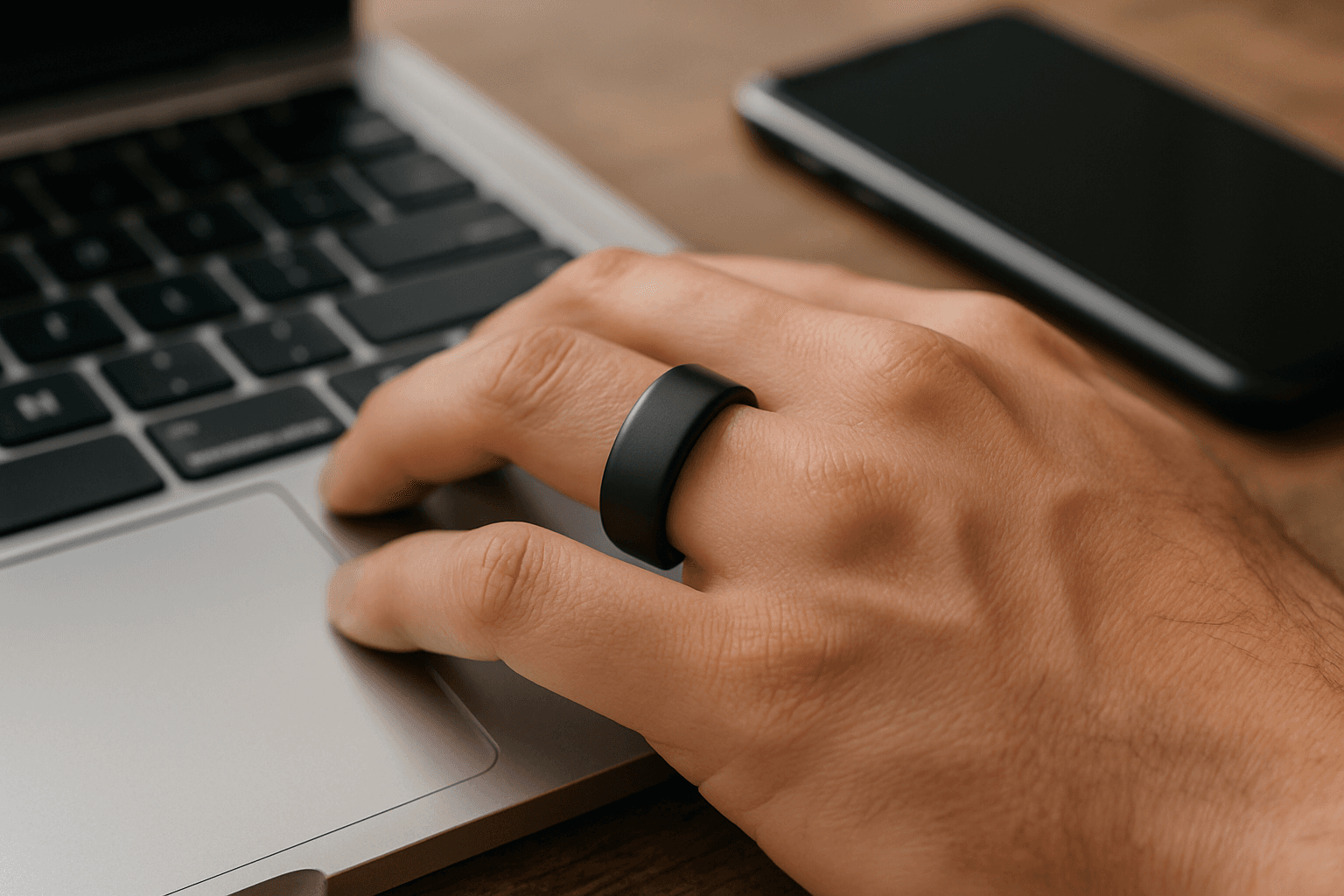
Smart rings have gone from novelty to genuine wearable category in a couple of years. They promise most of the health tracking of a smartwatch in a package that looks like jewelry and disappears on your finger. But they aren't cheap, some lock features behind a subscription, and the market just went through a legal shakeup that changed which rings you can even buy. Here's a straight answer to whether one belongs on your finger.
What a smart ring actually does
A smart ring is a screenless health tracker you wear on a finger. Instead of a display and apps, it packs low-power optical and temperature sensors plus an accelerometer, then sends everything to a phone app over Bluetooth. Smart rings lack screens and are limited by their small size, so they aren't suitable for GPS or heavy interaction; instead they rely on low-power sensors and Bluetooth modules.
The core metrics are consistent across brands: sleep stages, resting heart rate, heart rate variability, blood oxygen, skin temperature trends, steps, and some form of daily "readiness" or recovery score. Both smart rings and smartwatches can track heart rate, blood oxygen, sleep, steps, and activity, but form factor creates significant functional differences.
The accuracy question
This is where rings genuinely shine. Because a finger has a denser, more consistent capillary bed than a wrist, and because a ring stays snug while you sleep, the sensor keeps clean contact all night. For sleep and resting heart rate, smart rings often win because they stay snug and steady on your finger during sleep, which improves tracking accuracy; but for workouts, calories, and daytime stress, smartwatches usually provide a broader, more detailed picture.
There's research behind the reputation. A 2024 study in Sensors comparing the Oura Ring, Fitbit, and Apple Watch against polysomnography found that the Oura Ring achieved 79% four-stage sleep classification accuracy, outperforming the wrist-worn devices. The trade-off is exercise: most smart rings do not attempt real-time heart rate display during workouts, and their active heart rate accuracy is measurably lower than their resting accuracy. If you want live pace, GPS routes, and heart-rate zones during a run, a ring won't replace a watch.
The subscription trap (and how to avoid it)
The biggest hidden cost in smart rings is the recurring fee, and it varies dramatically by brand.
Oura is the market leader and charges both ways. The Oura Ring 4 starts at $349, with Oura Membership priced at $5.99 per month or $69.99 per year. The first month is free, but the app's insights are gated behind that membership. Oura earns some of that with its hardware: the Ring 4 offers up to eight days of battery life and a "Smart Sensing" platform that uses updated sensors and algorithms to capture more accurate blood oxygen, heart rate, and breathing readings.
Samsung took the opposite approach. The Samsung Galaxy Ring costs $399, but Samsung does not require a subscription for its full range of health features — important because Oura's monthly fee means the Galaxy Ring is better value long term, becoming cheaper than an Oura after about 17 months. The catch is the ecosystem: Samsung didn't make the Galaxy Ring compatible with iOS, so iPhone users are out of luck and it needs an Android phone. For hardware, the Galaxy Ring offers up to seven days of battery, a portable charging case, titanium construction, 10 ATM and IP68 durability, and PPG, skin temperature, and accelerometer sensors.
Ultrahuman built its pitch entirely around no fees. The Ultrahuman Ring Air retails for $349 with no subscription fees required to get the most out of the device. It also carries a notable regulatory credential: the Ring Air has FDA clearance for atrial fibrillation (arrhythmia) detection. Battery life is more modest — reviewers report around four days per charge.
If price is your main concern, the budget option is worth knowing about. The RingConn Gen 2 costs $299 with no subscription, offers up to 12 days of battery — the best in the category — and adds automatic sleep apnea monitoring. There's an even cheaper, thinner model: the RingConn Gen 2 Air sells for $199 with subscription-free standard features and up to 10 days of battery, though its fitness tracking is limited.
The legal shakeup you need to know about
Before you buy a non-Oura ring in the U.S., understand what happened in 2025. The U.S. International Trade Commission ruled in favor of Oura in its patent case against Ultrahuman and RingConn, ordering exclusion and cease-and-desist remedies that ban the infringing rings from being imported and sold in the U.S. market effective October 21, 2025.
The two companies landed in different places. Oura and RingConn announced a settlement and patent license agreement, with Oura granting RingConn a multi-year license to keep selling its rings and app in exchange for royalty payments. Ultrahuman fought it: existing Ultrahuman Ring Air owners keep full support and subscription-free insights if purchased on or before October 21, 2025, and the company says a new ring design is already in development to launch in the U.S. as soon as possible. That newer model is arriving — the Ultrahuman Ring Pro is coming to the U.S. at a one-time cost of $479, promising up to 15 days of battery and an onboard dual-core processor. The practical takeaway: availability of some brands may be spotty depending on stock and where you shop, so check before you commit.
Sizing: the step people get wrong
A smart ring only works if it fits correctly, and this trips up first-time buyers. Every major manufacturer ships a free sizing kit with plastic dummy rings, and you should wear the right size for a full 24 hours — including overnight — before ordering the real device. The reason accuracy depends on it: the optical sensors sit against the palm side of your finger, so a loose ring lets the sensor lift off and readings drift, while a too-tight ring is one you'll stop wearing.
The bigger commitment is permanence. Smart-ring sizes are fixed — there's no resizing service like traditional jewelry, because the internal sensor and battery can't be moved. If your finger size changes, your only real fix is moving the ring to a different finger. Note that Oura also charges for the kit itself: the brand offers a sizing kit with plastic dummy rings for $10.
So, are smart rings worth it?
It depends on what you want tracked and how you like to wear tech.
A smart ring is worth it if you care most about sleep, recovery, and around-the-clock passive metrics; you want something comfortable and discreet enough to wear 24/7; and you like multi-day battery life instead of nightly charging. It's also a strong pick if you find a smartwatch's screen and notifications distracting.
Skip it if your priority is workouts. Rings can't show live stats, don't do GPS, and are weaker at active heart rate — a smartwatch remains the better tool for training.
On money, do the full math before buying. A $350 device plus a $6/month subscription costs roughly $566 over three years — more than many premium no-subscription alternatives. Oura leads on software and ecosystem polish, but Samsung, RingConn, and Ultrahuman make a compelling case by dropping the recurring fee entirely. If you're an iPhone user, your realistic choices narrow. If you're on Android and want the best value, a subscription-free ring is the smarter long-term buy — just confirm it's actually available where you shop before you order a sizing kit.